

Maersk Warns Iran Toll Plan Threatens Global Shipping: Dangerous Precedent
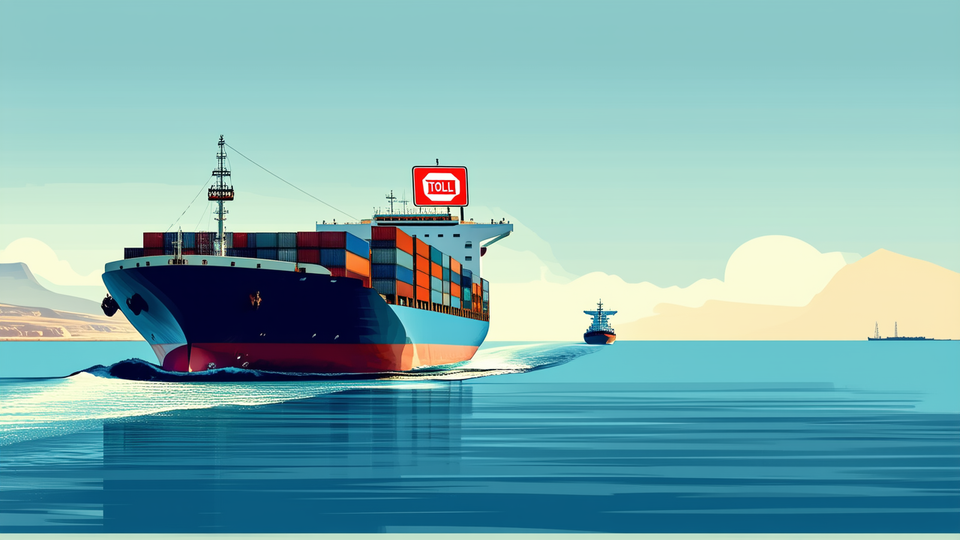
Maersk’s Caution on Iran’s Proposed Strait of Hormuz Fees
As the United States and Iran negotiate to reopen the Persian Gulf, Iran has floated a plan to levy fees on vessels passing through the strategically vital Strait of Hormuz. The proposal, which could bring in as much as $40 billion each year, would tie shipping access to payments for security, safety, and environmental services.
Maersk’s chief executive voiced strong concerns, warning that allowing such a toll could establish a “dangerous precedent” for maritime commerce. Shipping companies fear that a formalized fee structure could be replicated in other chokepoints, turning essential trade routes into revenue-generating toll systems. The potential for a global “contagion” of tolls was highlighted by U.S. officials, who emphasized that international waterways must remain open and free of unilateral charges.
The economic stakes are high. The Strait of Hormuz carries roughly one‑fifth of the world’s oil shipments, and any added cost could ripple through global energy markets. Industry analysts estimate that the proposed fees could increase transportation expenses, affect commodity prices, and reshape trade patterns. Maersk, as a leading global carrier, stresses that such a shift would undermine the predictability that underpins international shipping.
U.S. policymakers have taken a firm stance, asserting that any system that conditions passage on payment or compliance with Iranian demands will not be recognized. The stance aims to preserve the principle that maritime routes remain neutral and accessible to all nations, free from political leverage.
Beyond the immediate financial implications, the proposal raises broader geopolitical concerns. If Iran’s model proves successful, other nations might be motivated to implement similar charging schemes, potentially fragmenting the global shipping network. This could lead to increased bureaucracy, heightened security risks, and diminished cooperation among maritime stakeholders.
In summary, while Iran seeks to monetize its strategic position, the shipping community, led by voices such as Maersk’s CEO, warns that the move threatens the free flow of commerce and could set a destabilizing example for other vital waterways.





