

MAGA Gets a Green Makeover After Trump’s Reflecting Pool Fiasco
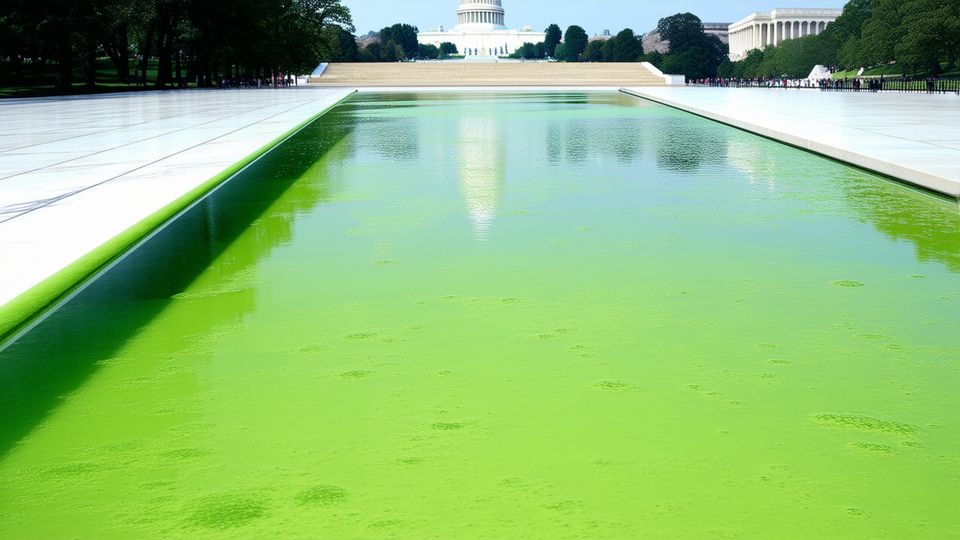
Washington, D.C. — What began as a $14 million effort to refresh the Lincoln Memorial’s reflecting pool with a fresh coat of paint quickly morphed into a viral showcase of unexpected green. On June 21, 2026, observers noted the pool’s surface turning a murky shade that journalists described as “puke green” and “split‑pea soup.” The hue was not a deliberate artistic statement; it was the result of an explosive algae bloom that experts say was primed by the administration’s decision to repaint the water’s walls a darker “American flag blue.”
Environmental specialists had warned months earlier that merely changing the pool’s coloration would do little to address longstanding algae problems. “Algae blooms can occur when hot temperatures pair with stagnant water, especially if the water absorbs more heat,” said Sarah Goodrich, an adjunct professor of geography at the University of Cincinnati. The darker paint, intended to make the water appear more vibrant, actually increased heat absorption, creating an ideal breeding ground for algae.
Algae, which thrives on nitrogen and phosphorus, found abundant nutrients in the pool’s water and surrounding pipes. While the paint’s composition has not been publicly disclosed, some experts note that certain pigments contain these nutrients, potentially aggravating the bloom. “If the paint carries nitrogen or phosphorus, it would be like feeding the algae,” noted Steve Goodale, owner of Swimming Pool Steve. “The darker surface simply speeds up the process.”
Beyond the chemistry, the sheer size of the reflecting pool—roughly 6.5 million gallons—makes algae control a daunting task. “It’s a massive surface area of a relatively shallow body of water,” Goodale added. The pool’s open‑air design also exposes it to pollen, bird droppings, and other natural contaminants that can seed further growth.
In response, the National Park Service deployed a two‑pronged approach. First, workers piped hydrogen peroxide into the water, a chemical that temporarily oxidizes algae but dissipates quickly. “Hydrogen peroxide turns into water within weeks, so it’s a short‑term fix,” said marine and environmental sciences professor Hans W. Paerl of the University of North Carolina. The agency also installed a nanobubbler system—a type of ozone injection that oxygenates the water without harming wildlife. “It mimics natural waterfalls, helping to keep the water clear,” Goodale explained.
Officials are hopeful the nanobubbler will provide a lasting solution, but the timing is critical. The 250th‑anniversary celebrations of the nation’s capital are slated for late July, and missed expectations could fuel political backlash. Critics have seized on the mishap, coining slogans such as “Make Algae Great Again” and “Make Algae Green Again.” The incident has become a flashpoint in the ongoing debate over the administration’s infrastructure priorities and environmental stewardship.
Climate scientists warn that the problem may only intensify. Warmer summers and longer heat waves—symptoms of a changing climate—extend the window in which algae can proliferate. “The real basic problem is algae love heat,” Paerl noted. “With climate change, these blooms are likely to become more frequent and harder to control.”
As the reflecting pool’s turquoise‑green surface reflects the Capitol’s marble dome, it also reflects a broader conversation: the intersection of politics, public works, and environmental science. Whether future projects will prioritize scientific insight over aesthetic ambition remains to be seen, but the algae episode has already rewired the slogan “Make America Great Again” into a lesson on the unintended consequences of rapid, high‑profile makeovers.





