Trump orders government agencies to call AI “super intelligence” and brands dissenters as enemies
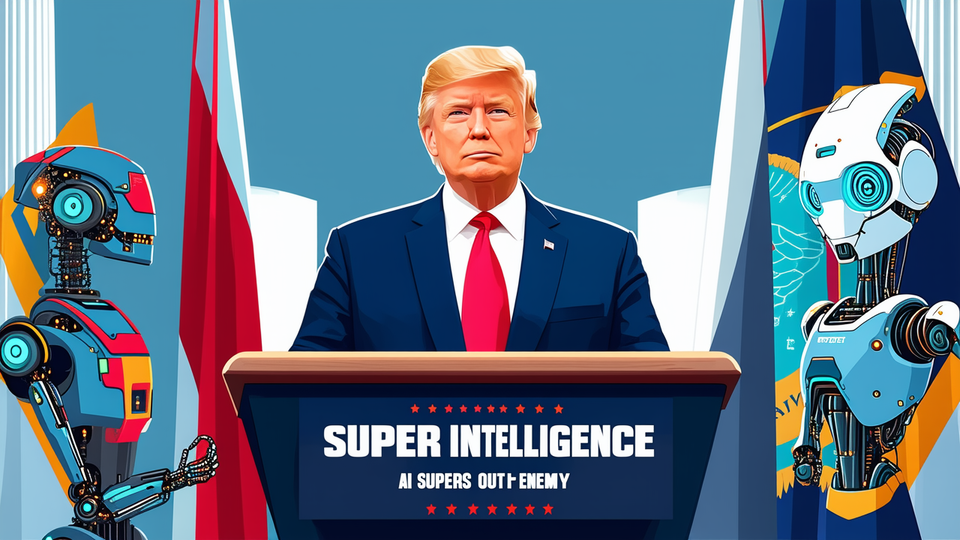
President Donald Trump issued an executive order on Oct. 9, 2026 that requires every U.S. federal agency to refer to artificial intelligence as “super intelligence,” and he posted on Truth Social that anyone who continues to use the term “artificial intelligence” is an “enemy” of the White House.
The order arrives less than a month before the 2026 midterm elections, prompting observers to question whether the mandate serves a policy purpose or is a partisan maneuver aimed at energizing the Republican base.
“The White House considers anyone that uses the term ‘artificial intelligence,’ as opposed to the highly accepted new and more accurate term, ‘super intelligence,’ THE ENEMY!”
In the same post, Trump warned that failure to adopt the new nomenclature would be met with hostility, a tone echoed in the language of the executive order that directs agencies to replace “AI” with “SI” in all official communications.
Several high‑profile tech executives have publicly embraced the rebranding. Elon Musk tweeted, “No more AI. SI. It’s better,” and later clarified that he believes the change could usher in “major abundance.” Jeff Bezos told Fox News that he “does like SI” and sees “artificial” as a misleading label. Nvidia CEO Jensen Huang announced a “White House Accord on Super Intelligence,” while Meta founder Mark Zuckerberg reiterated his earlier prediction that superintelligence will create new opportunities.
“Hammering ‘Super Intelligence’ and playing all those games is not what people voted for,” reported War Room reporter Natalie Winters.
Academic critics warn the renaming could confuse the public and distract from substantive AI policy debates. University of Wisconsin‑Milwaukee professor Thomas Haigh argued the shift does not reassure the public and may undermine trust in government communication.
With Trump’s approval hovering in the low‑mid 30s percent, the order is viewed by many analysts as an attempt to cement a rallying cry for his supporters before voters head to the polls. Federal agencies are now tasked with revising documents, websites, and internal references, while watchdog groups signal plans to challenge the order in court.