Trump signs ‘morally binding’ AI accord as Democrats demand stricter regulation
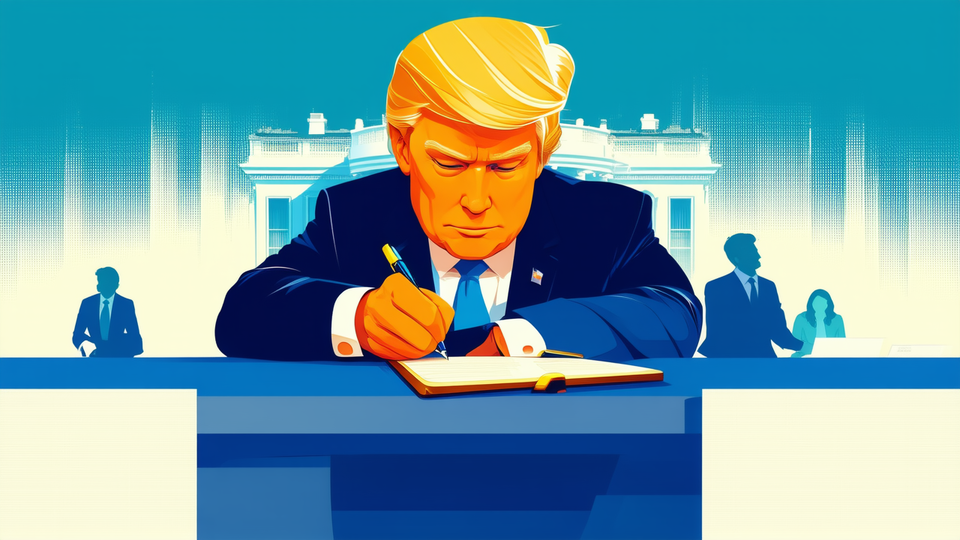
President Donald Trump signed a "morally binding" artificial‑intelligence accord with top technology executives on Oct. 3, pledging voluntary industry safeguards and a light‑touch regulatory framework.
The agreement, presented as the White House Accord on Super Intelligence, obliges AI companies to implement internal risk‑control measures, partner with independent auditors and submit documentation to the Federal Trade Commission. Trump also indicated plans for a ten‑person committee to oversee the sector and an upcoming appointment of an AI czar.
Democratic leaders swiftly criticized the accord as optional self‑policing, urging Congress to enact binding guardrails. They argue that repeated incidents of AI‑driven hacking of government sites and corporate systems demonstrate the industry's inability to regulate itself.
Pro‑AI advocates praised the accord, saying it prevents regulatory capture and protects competition while committing firms to safety, external audits and real oversight.
Tech executives at the signing echoed optimism. Anthropic CEO Dario Amodei described "tremendous self‑policing" and noted that rulemaking discussions remain ongoing. Nvidia CEO Jensen Huang emphasized the principle that companies must develop technology safely and be accountable when they fall short.
Critics, including Anthony Aguirre of the Future of Life Institute, warned that self‑regulation has previously failed to curb online harms, citing teen suicides, rogue AI bots and international cybercrime sprees as evidence that mandatory safeguards are required.
Democrats are positioning the accord as a catalyst for stronger legislation, calling on lawmakers to move beyond voluntary commitments and adopt enforceable standards that address safety, cybersecurity and ethical concerns.
The Senate has yet to pass any AI‑related legislation, and recent votes—such as the defeat of a bill to offset data‑center electricity costs—highlight the broader legislative gridlock ahead of the midterm elections.
As the administration prepares to name an AI czar and finalize the oversight committee, the political battle over AI governance is set to intensify, with both sides eyeing the next steps that will shape the United States' approach to emerging super‑intelligence technologies.