U.S. Army deploys 600 troops to Latin America to train forces and target drug cartels
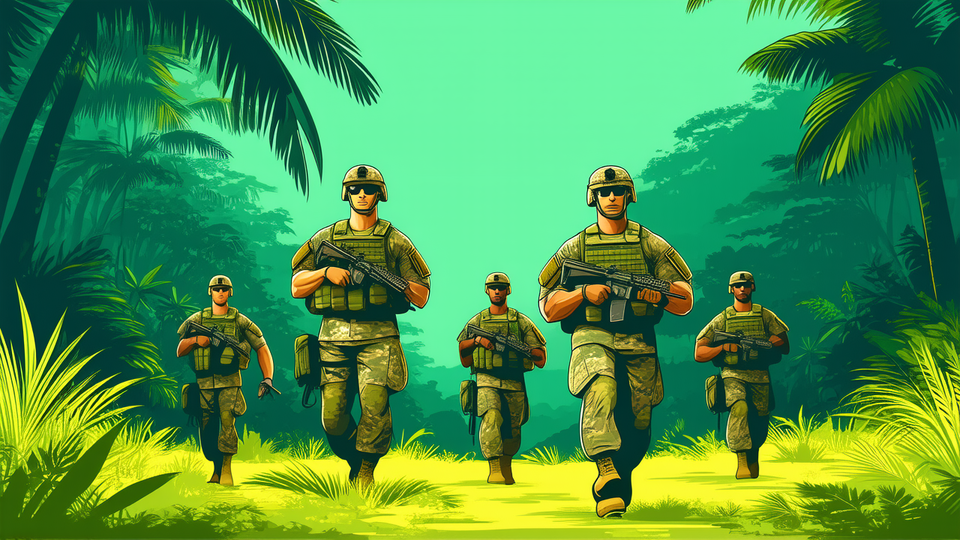
The United States Army announced on October 15 that about 600 soldiers from the 10th Mountain Division will be deployed to Latin America to train local forces and eventually conduct raids against terrorist drug cartels.
The deployment, staged under U.S. Southern Command, will begin with a jungle training facility in Panama before the troops move on to joint exercises with partner militaries in Colombia and Honduras. Officials said the forward‑staging allows the Army to assess where the forces will be needed most across the region.
The move is part of the broader Shield of the Americas initiative, which now includes a coalition of 19 nations working to disrupt trafficking networks. The initiative originally launched with 13 countries and has expanded despite opposition from left‑leaning governments in Mexico, Brazil, Cuba, Nicaragua and Venezuela.
Mexico’s President Claudia Sheinbaum has publicly rejected the presence of U.S. troops on Mexican soil, citing national sovereignty. Nevertheless, Mexican security chief Omar Garcia Harfuch has coordinated intelligence sharing, and Mexican units have participated in joint raids led by U.S. special‑operations advisers.
Prior to the October announcement, U.S. forces already took part in a September raid with Ecuadorian troops that dismantled a cell of the Jalisco New Generation Cartel operating in Ecuador. The operation demonstrated the ability of U.S. and regional partners to act jointly against cartel outposts outside Mexico.
General Francis L. Donovan, commander of SOUTHCOM, said the United States is considering all options to pressure cartels, including land strikes, arrests, safe‑house takedowns and increased cargo‑scanner use at borders. He described the strategy as creating “total systemic friction” for the criminal networks.
The deployment also supports the staffing of a new Western Hemisphere military command based in Miami, reflecting the Trump administration’s push to expand military tools against narcotics trafficking.
Since the campaign began more than a year ago, U.S. forces have conducted dozens of strikes that have killed more than 235 suspected narco‑terrorists. The newly forward‑staged troops will add a training and operational capacity to those ongoing efforts.
U.S. officials anticipate that the presence of the 600 soldiers will bolster regional security cooperation and increase the frequency of joint raids, though the long‑term impact will depend on the willingness of key partners, especially Mexico, to share intelligence and allow operations on their soil.