Commentary argues USAID not behind Latin America’s rightward shift
On October 5, 2026, commentator SarahDownSouth published a piece arguing that the United States Agency for International Development (USAID) was not responsible for the recent rightward swing in Latin American elections.
The analysis points out that the shift began before the Trump administration’s 2025 re‑election and before USAID’s partial shutdown on March 10, 2025, when U.S. Senator Marco Rubio announced that roughly 83% of USAID programs would be cancelled.
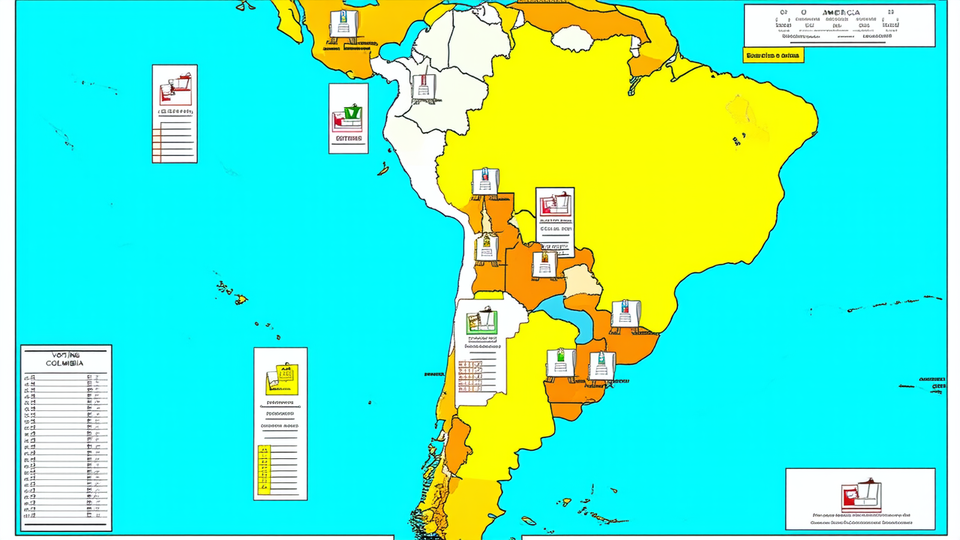
Sarah notes that countries such as Costa Rica, Ecuador, Bolivia, Chile, Honduras, Peru and Colombia elected conservative leaders after USAID’s funding was reduced, but the timeline does not support a causal link. Costa Rica’s right‑leaning president Rodrigo Chaves was elected in 2022 and his hand‑picked successor, Laura Fernández, won in February 2026, well before the agency’s cutbacks.
Financial data from 2023 shows that USAID allocated only $1.8 billion to the Latin America and Caribbean region, a fraction of the $17.2 billion sent to Europe and Eurasia, $12.1 billion to Sub‑Saharan Africa and $3.9 billion to the Middle East and North Africa. Most of the Latin America money went to Colombia for peace‑accord and counternarcotics work, to Haiti for stability, and to a Central American corridor addressing migration root causes. The analysis argues that these modest sums could not have determined electoral outcomes.
The commentary also highlights the collapse of Venezuela’s Petrocaribe scheme. After U.S. sanctions in 2019 halted repayment of Venezuelan oil loans, the regime’s capacity to fund left‑wing parties across the continent dwindled, removing a financial pillar that had previously bolstered socialist campaigns.
According to the piece, five primary drivers explain the rightward turn: rising crime and insecurity; backlash against mass migration, especially from Venezuela; persistent economic stagnation and inflation; fatigue with socialist policies; and a resurgence of socially conservative cultural values. Voters in Brazil, Chile, Peru and other nations expressed concern over gang violence, economic hardship and perceived erosion of traditional norms, prompting support for candidates who promised tougher security measures and market‑friendly reforms.
While the commentary acknowledges that USAID did engage in political competition and consensus‑building activities, it concludes that those efforts were unrelated to the broader electoral trends. Instead, it credits local dynamics and regional factors as the decisive forces reshaping Latin American politics.
The article ends by noting that the debate over foreign aid’s influence on elections is likely to continue, as policymakers and analysts assess how best to support democratic outcomes without overstating the impact of U.S. assistance.